
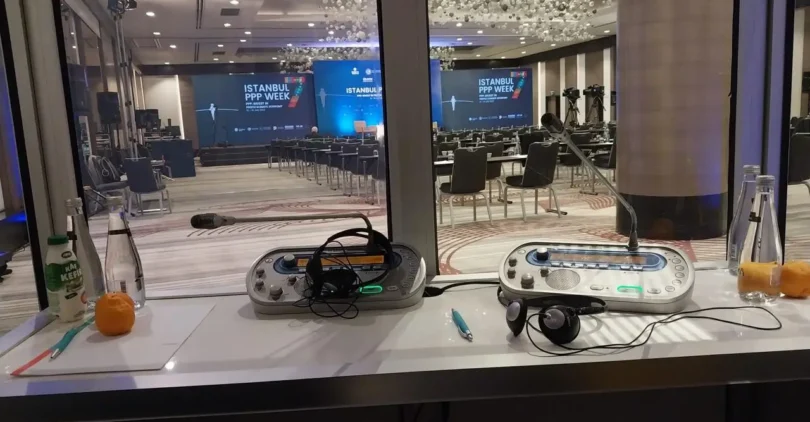
Simultaneous interpreting is a fast and fluid service in which the interpreter translates simultaneously with the speaker. It is generally preferred for large-scale events, international conferences, congresses and live broadcasts. As Telepreter, we support simultaneous translation with our state-of-the-art equipment, ensuring that participants understand instantly.
What is Simultaneous Translation?
Simultaneous translation means that what the speaker is saying is translated into another language at the same time. In this type of translation, the translator listens to the speech instantly and translates at the same time. It is often used at events such as conferences, international meetings, or live streams. Translators are located in special simultaneous booths and the listeners follow the translation through headphones.
Simultaneous interpretation is a process that requires speed and accuracy. The translator must make sense of what the speaker says and translate it accurately and fluently into the target language. For this reason, simultaneous interpreters are usually highly proficient in both the target and source language. In addition, it is necessary to have strong listening and multitasking skills so that the translation can be done without interruption and instantly.
Simultaneous interpreting differs from consecutive interpreting because the interpreter performs the translation without waiting for the speaker to finish speaking. This ensures that communication continues quickly and uninterruptedly.
How is Simultaneous Translation Done?
Simultaneous translation is done by translating what the speaker is saying into a different language at the same time. This type of translation is often used, especially at events such as conferences, international meetings, and live broadcasts. In simultaneous interpreting, interpreters are located in a soundproofed booth and listen to the speech through headphones, while simultaneously translating into the microphone. Listeners, on the other hand, listen to the translation with the help of headphones.
Simultaneous translation is a process that requires a lot of attention and speed. The interpreter must instantly perceive what the speaker is saying and accurately translate it into the target language. Here is a step-by-step process that shows how simultaneous translation is done:
- Soundproofed Cabin: Simultaneous translators are located in a soundproofed cabin to avoid being affected by external sounds. This cabinet minimizes distractions for the translator.
- Headset Usage: The translator wears headphones to hear the conversation uninterrupted and clearly. Having a clear understanding of what the speaker is saying is critical to the accuracy of the translation.
- Simultaneous Listening and Translation: The translator translates at the same time as listening to what the speaker is saying. This is a skill that requires translators to think quickly and multitask.
- Translation into Microphone: The translator translates into the microphone, and the audience listens to the translation through headphones. In this process, the flow of the conversation continues undisturbed.
- Intellectity and Clarity: The main purpose of simultaneous translation is to provide a clear and understandable translation to the listeners. That’s why translators take care to translate sentences completely and accurately.
In order to perform simultaneous translation successfully, translators must have advanced attention, quick thinking and multitasking skills as well as grammar.
What are the Features Required for Simultaneous Translation?
Simultaneous interpreting is a process that requires both language skills and mental agility from interpreters. There are some basic characteristics that the translator must possess in order to be successful in this translation method.
- Language Dominance: Simultaneous translators need to have a full command of both the source language and the target language. Mastery of the grammatical structure, vocabulary and cultural subtleties of the language is essential for accurate and fluent translation.
- Quick Thinking: There is no room for waste of time in simultaneous translation. The interpreter has to translate what the speaker says instantly. This requires quick thinking and multitasking skills.
- Ability to Focus: The translator has to listen carefully to the speech on the one hand and translate instantly on the other. Therefore, a strong ability to concentrate is required.
- Domain Knowledge: Simultaneous interpretation can often be related to technical or specific issues. For example, if a translation is to be done at a medical congress, it is important that the translator is familiar with medical terms. Pre-provided texts can also help translators become more comfortable with this process.
- Endurance: Simultaneous interpretation is very mentally exhausting. That’s why a translator should usually rest after working for 30-40 minutes. At large events, more than one translator often takes turns.
Interpreters with these characteristics can successfully carry out the simultaneous translation process and provide clear communication to the audience.
What are the Uses of Simultaneous Translation?
Simultaneous interpretation is an important method that allows speakers of different languages to communicate instantly by eliminating language barriers. This translation method is widely used, especially in events and meetings that take place globally. The main uses of simultaneous interpretation are:
- Conferences, Symposiums and Seminars: In academic or commercial meetings with participants in different languages, simultaneous translation ensures effective communication. Attendees can instantly listen to speakers in their own language.
- International Congresses: In large-scale congresses with international participation, it is ensured that speakers of different languages come together at the same event. Translators translate quickly and accurately, ensuring that participants get efficiency from the event.
- TV Programs and Live Broadcasts: In live broadcasts, especially news bulletins and documentaries, information is instantly transmitted to international audiences through simultaneous translation.
- Sports Activities: In sports events held around the world, what the announcers or coaches say is translated into different languages and conveyed to audiences around the world.
- International Diplomatic Negotiations: In meetings between states, simultaneous translation is used so that government officials understand each other correctly. This ensures the proper functioning of diplomatic relations.
Simultaneous interpreting has become one of the main tools for effective communication in the globalized world and allows participants in different languages to communicate at the same time.
What are the Advantages of Simultaneous Interpreting?
Simultaneous interpretation is one of the fastest and most effective ways to overcome language barriers. Thanks to its many advantages, it allows participants in different languages to easily communicate at the same event. The main advantages of simultaneous translation are:
- Effective Communication: In multilingual meetings, it ensures that participants can get along instantly, thus ensuring effective communication.
- Time Saving: Since translations are done instantly, there is no waste of time waiting for the translation of conversations.
- Multilingual Translation: Translation can be done in multiple languages at the same time, which is a great advantage in international events with large participation.
- No Restrictions on the Number of Listeners: Thanks to the translation system, everyone can listen at the same time without any limit on the number of participants.
These advantages make simultaneous translation one of the most preferred translation methods worldwide.
Who Is Called a Simultaneous Interpreter?
Simultaneous interpreters are professionals who specialize in grammar and have the ability to think quickly and translate accurately. These translators are people who can instantly translate a speech into another language and have proper diction and speech structure as well as language skills. Simultaneous interpreting is a profession that requires a high level of attention and focus, and is usually acquired through many years of training and experience.
Simultaneous interpreters are especially involved in conferences, meetings or international negotiations and can translate rapidly developing conversations in no time. Since this translation method is mind-tiring, it is often necessary to employ more than one interpreter. Multiple translators improve the accuracy and quality of the translation, ensuring an efficient and understandable communication process.
What are the Simultaneous Translation Prices?
Simultaneous interpretation prices vary depending on various factors. These factors include the duration of the event, the language pairs to be translated, the translation equipment requested, and the experience of the translators. Prices can often be higher, especially for international conferences or large-scale meetings.
The fact that the field in which the simultaneous interpretation will be performed requires expertise, such as medical, legal or technical fields, may affect the prices because such translations require more knowledge and experience. In addition, team translations can also increase the price, as more than one interpreter may be required for the duration of the event.
In any case, when hiring simultaneous interpretation services, the experience of the service provider and the quality of the translation team should be taken into account. It is best to contact the service providers to get clear information about the prices.